
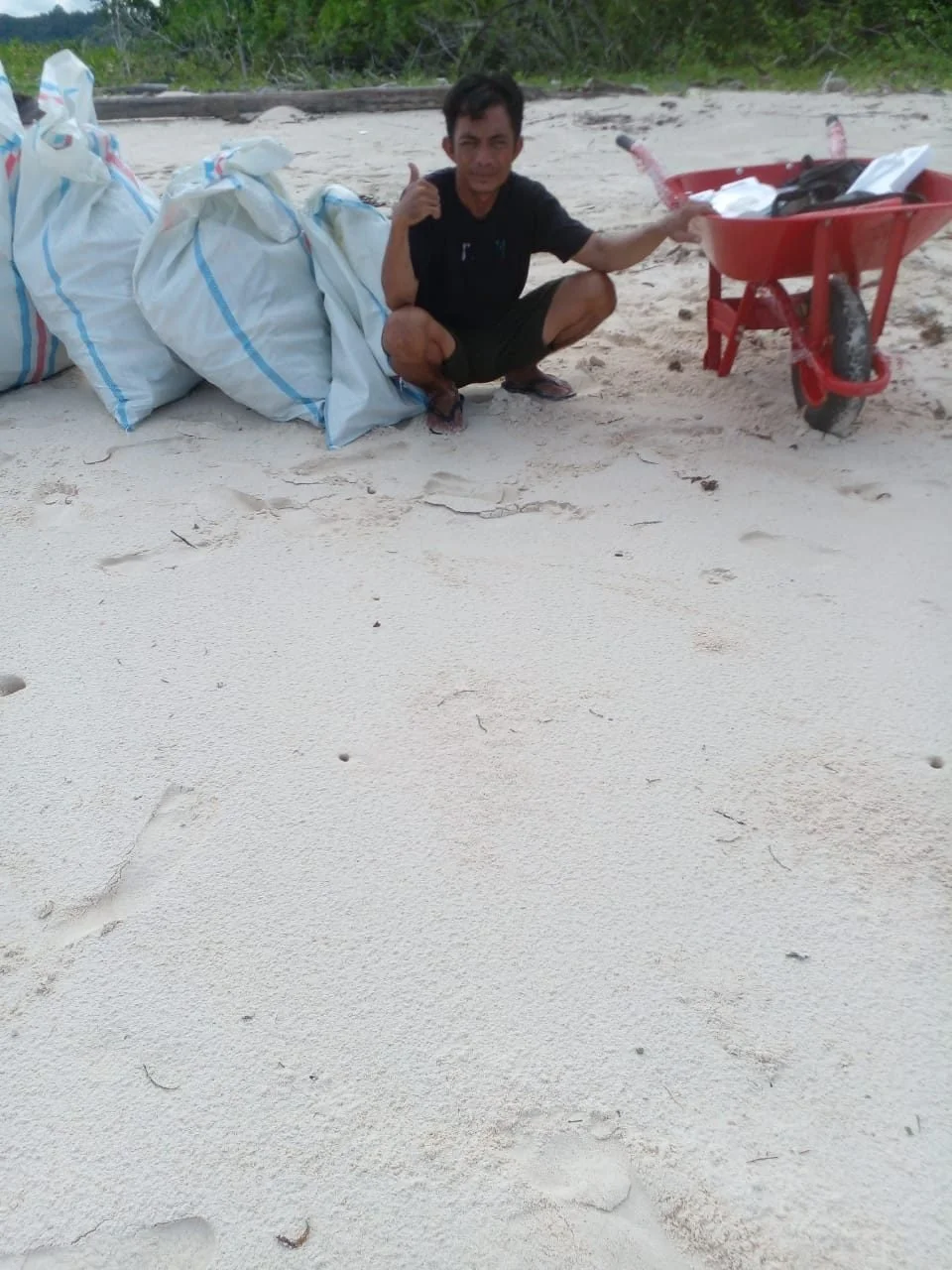
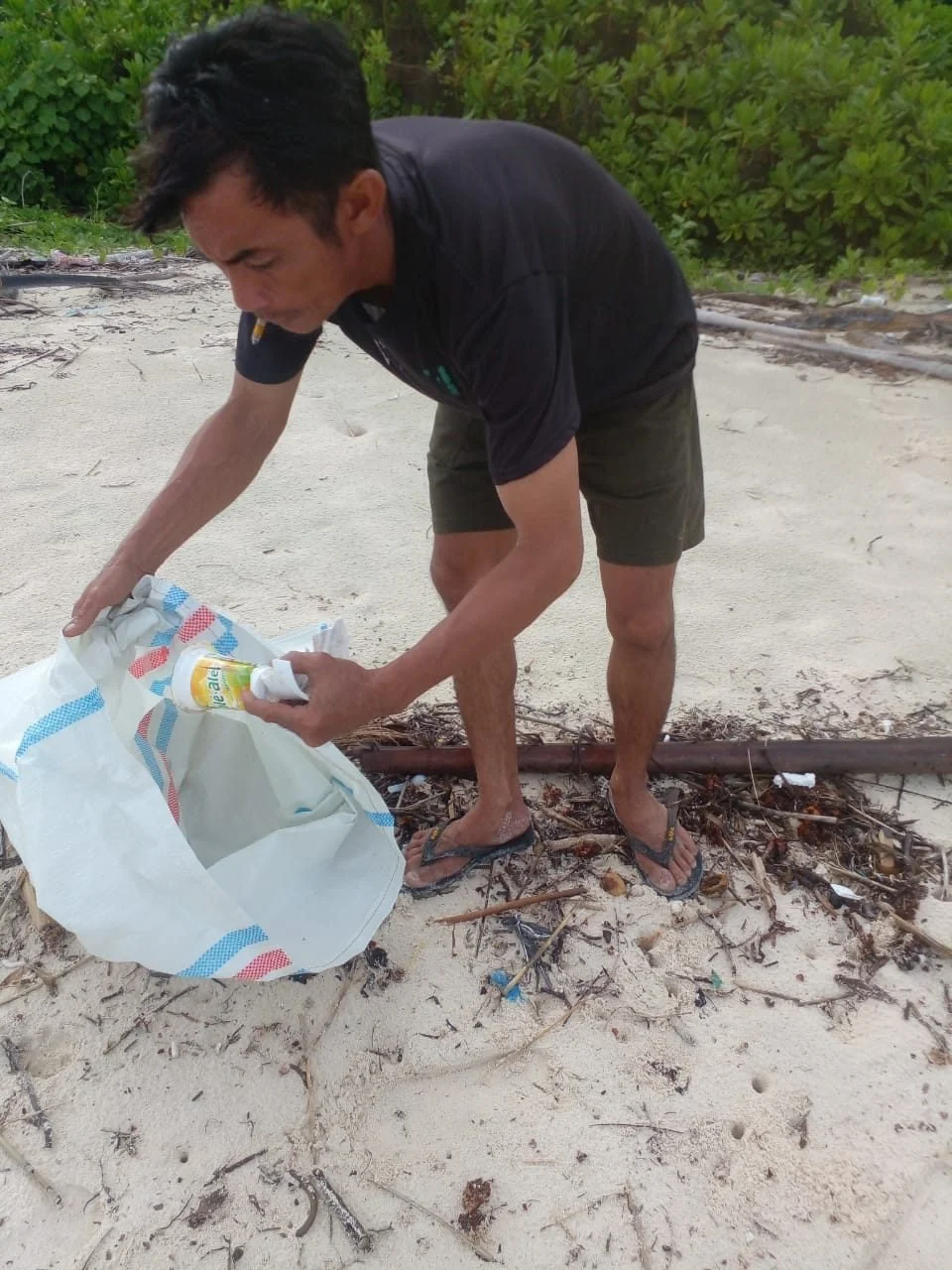
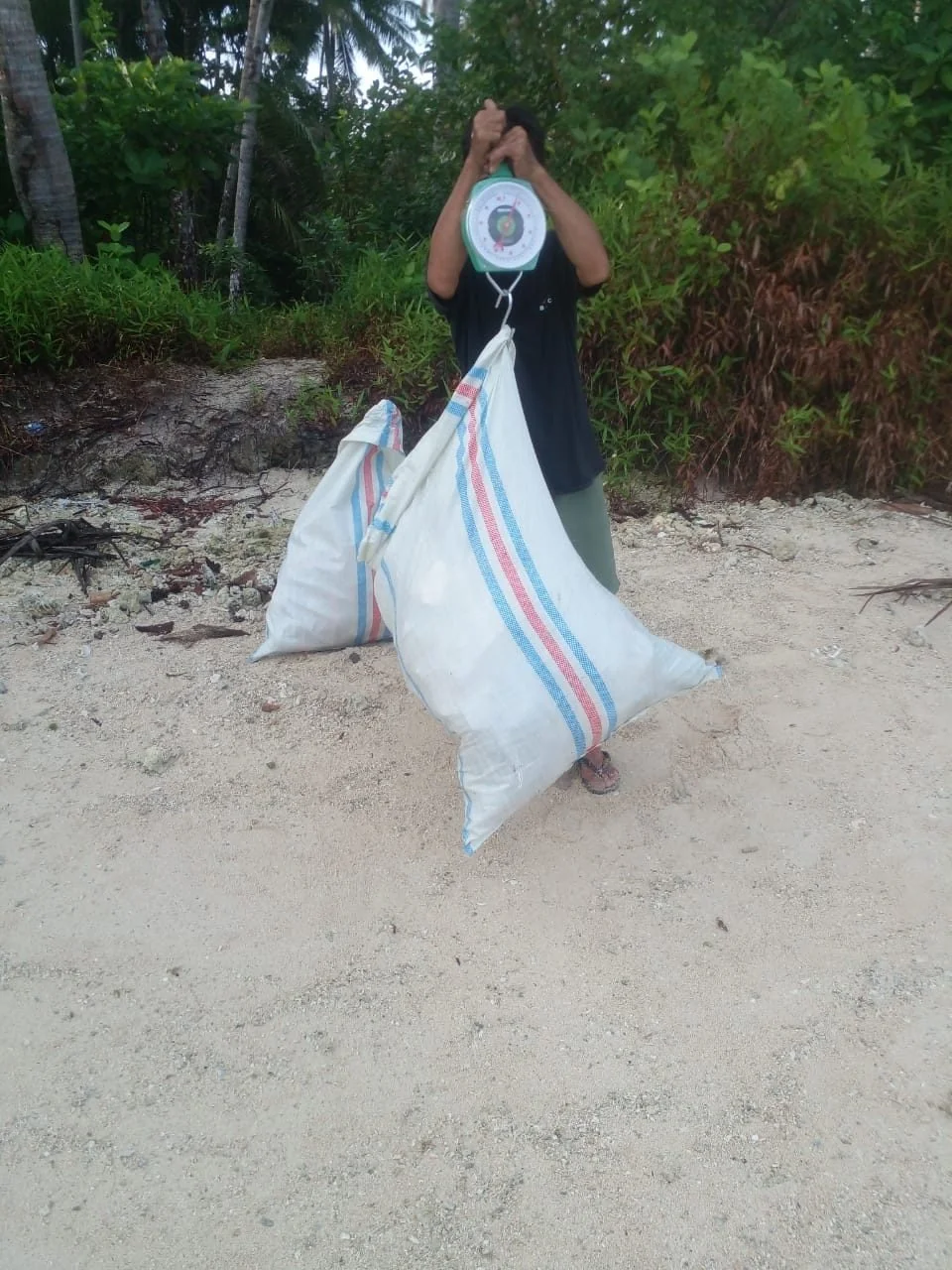
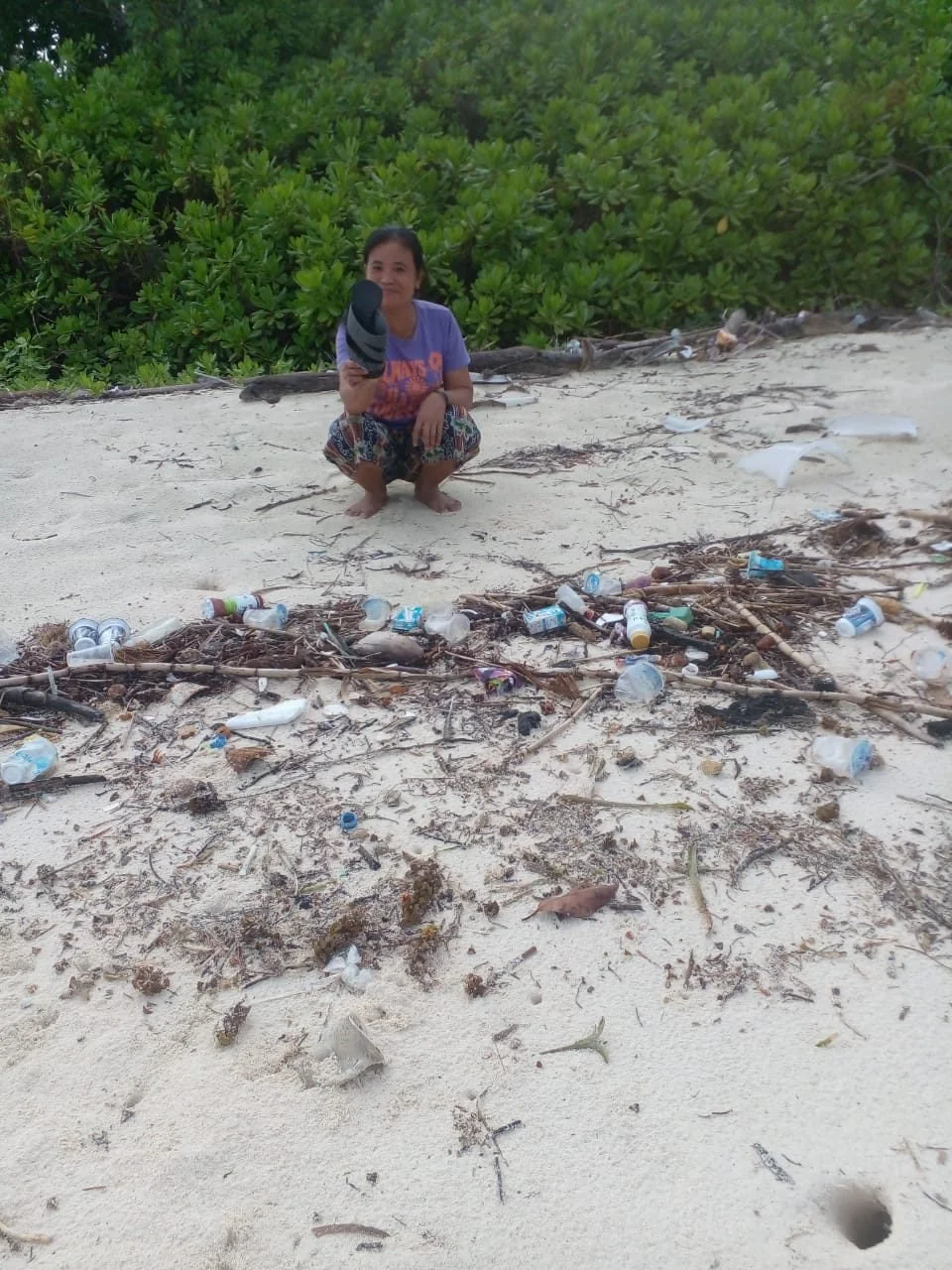
The first week of Marine Resource Management’s Sibaranun cleanup effort has been about more than picking up trash. It has also been about building a routine: collecting and sorting material, recording the work, taking photographs, and investigating where the collected waste can go next.
A practical beginning
As we shared in our first cleanup dispatch, Ifan and his wife cleared about 100 meters of shoreline and collected 10 kilograms of recyclable plastic and other human-made trash. The beach is used as a launch site for artisanal fishing canoes, making access an immediate, practical part of the work.
Natural beach materials were cleared from the launch area for composting nearby. Away from places needed for beach access and boat launching, natural materials will be left in place. They belong to the shoreline ecosystem and are not included in our marine debris weights.
Making the work visible
The week’s field reports document additional collection and sorting on Sibaranun, with separate entries for recyclables, glass bottles, and other trash. Photographs show the material being handled and the conditions along the shore.
We are also establishing a consistent record of the effort. The reporting system captures the worker, location, work times, material weights, notes, photographs, and expenses when entered. This gives us a way to follow the work over time and check the records before drawing conclusions about longer-term results.
The next step is a reliable route for the waste
Picking material up is only one part of the job. Early logistics research included inquiries about shipping material from Telo to Nias and checking local disposal options. Those questions matter: a workable cleanup effort needs a dependable destination for what is collected.
We are treating collection, transport, recycling, and disposal as separate steps. The first week’s collection reports document material picked up; they do not by themselves confirm that every bag has reached a recycler or final disposal site.
Small steps, shared responsibility
Thank you to Ifan, his wife, David, and everyone helping this effort take shape. The first week has given us an initial cleanup result, a growing photographic record, and a clearer set of practical questions to work through.
Follow the cleanup records, explore the field photo gallery, or learn more about the Sibaranun project.
Support the Sibaranun cleanup →
Reporting period: the opening week, October 23–30, 2026. This dispatch draws on the published first-day story and field reports available at publication. Photographs are from the cleanup team’s submitted reports.
