Seaweed Mariculture
Growing Pacific dulse on land
Marine Resource Management was contracted by Oregon Seaweed to design, build, and operate a pilot dulse grow-out system. MRM cultivated the seaweed, monitored growth rates, and harvested biomass to supply Oregon Seaweed with seed stock, the living material used to establish and expand its cultures.
What is dulse?
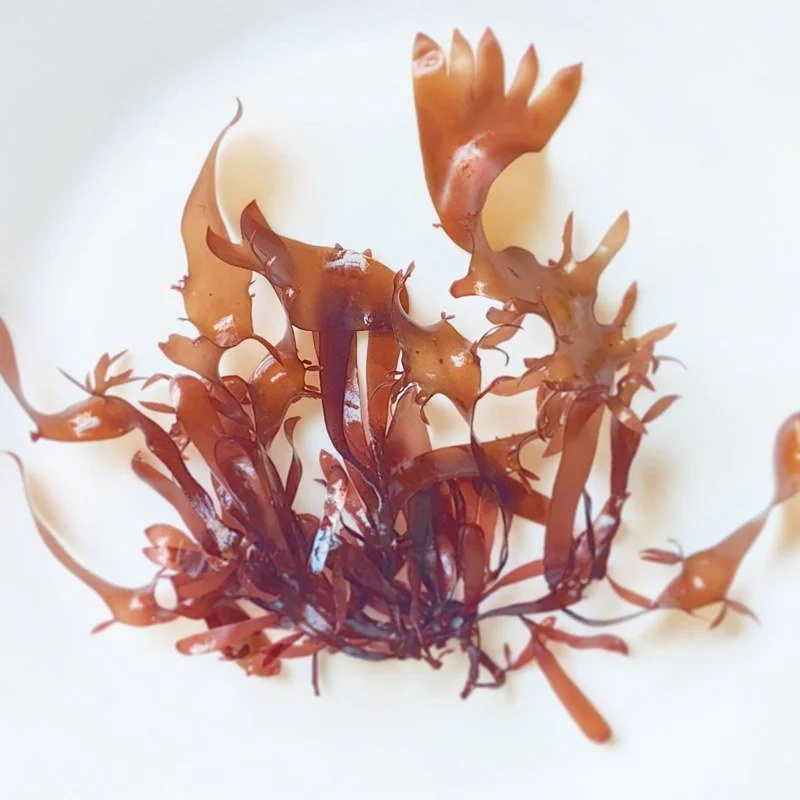
Close-up of a cultured dulse frond and its branching blades. View photograph.
Dulse is an edible red seaweed with delicate, branching fronds and a savory ocean flavor. Fresh dulse can be used in salads, soups, and stir-fries, or cooked into crisp chips. Its ability to grow from vegetative fragments makes it particularly suited to tank cultivation: growers retain part of the crop to produce the next harvest.
How dulse is cultured
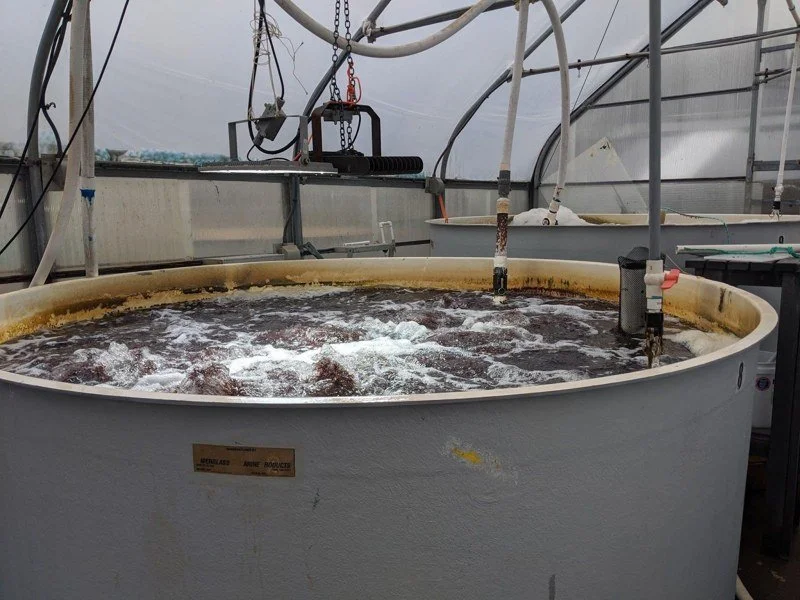
Land-based dulse culture brings seawater into tanks where aeration keeps the seaweed gently tumbling. As the fronds circulate, they take turns near the surface, receiving sunlight while accessing dissolved nutrients throughout the tank.
Successful cultivation depends on balancing seawater supply, temperature, salinity, aeration, light, stocking density, and nutrients. Growers monitor the crop’s color and condition, measure biomass to track growth, and adjust conditions as the seaweed develops. Partial harvests make room for new growth while retaining healthy material for the next crop.
Tank design ties these elements together. Water intakes, filtration, air distribution, screened overflows, and harvest drains all affect how efficiently a system can be maintained. Good circulation prevents fronds from accumulating in stagnant areas, while suitable light and nutrient conditions support continued growth.
MRM’s pilot work
MRM brought system construction and crop management together, following the seaweed from initial stocking through growth and harvest. The work included designing and building the grow-out system, growing dulse, monitoring growth rates, and harvesting seaweed to supply seed stock to Oregon Seaweed.
The project connected practical aquaculture operations with the biological requirements of the crop, producing living seed stock for commercial cultivation.
Oregon Seaweed today
Oregon Seaweed has expanded to land-based farms in Bandon and Garibaldi, Oregon, growing Pacific dulse in tanks supplied with coastal seawater. The company’s published farm information describes ten tanks in Bandon and twenty in Garibaldi.
The company markets fresh dulse for home kitchens and restaurants, alongside dried products, and lists retail outlets along the Oregon Coast, in the Portland area, and in Seattle. Its work brings tank-grown seaweed into everyday cooking and connects coastal aquaculture with a broader food market.
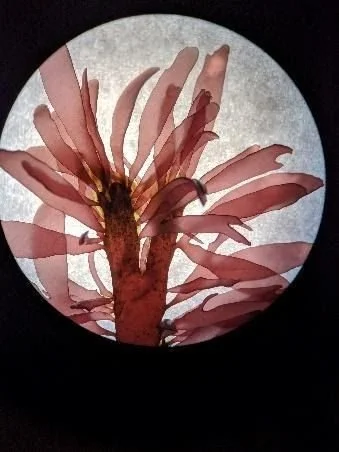
Close-up of a cultured dulse frond and its branching blades.
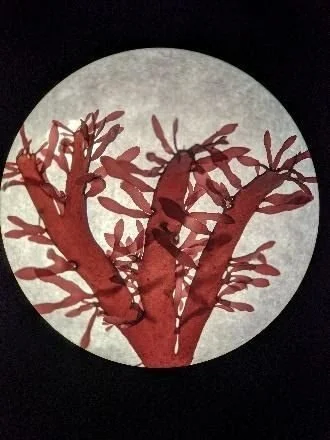
A close-up of branching dulse grown under natural light.
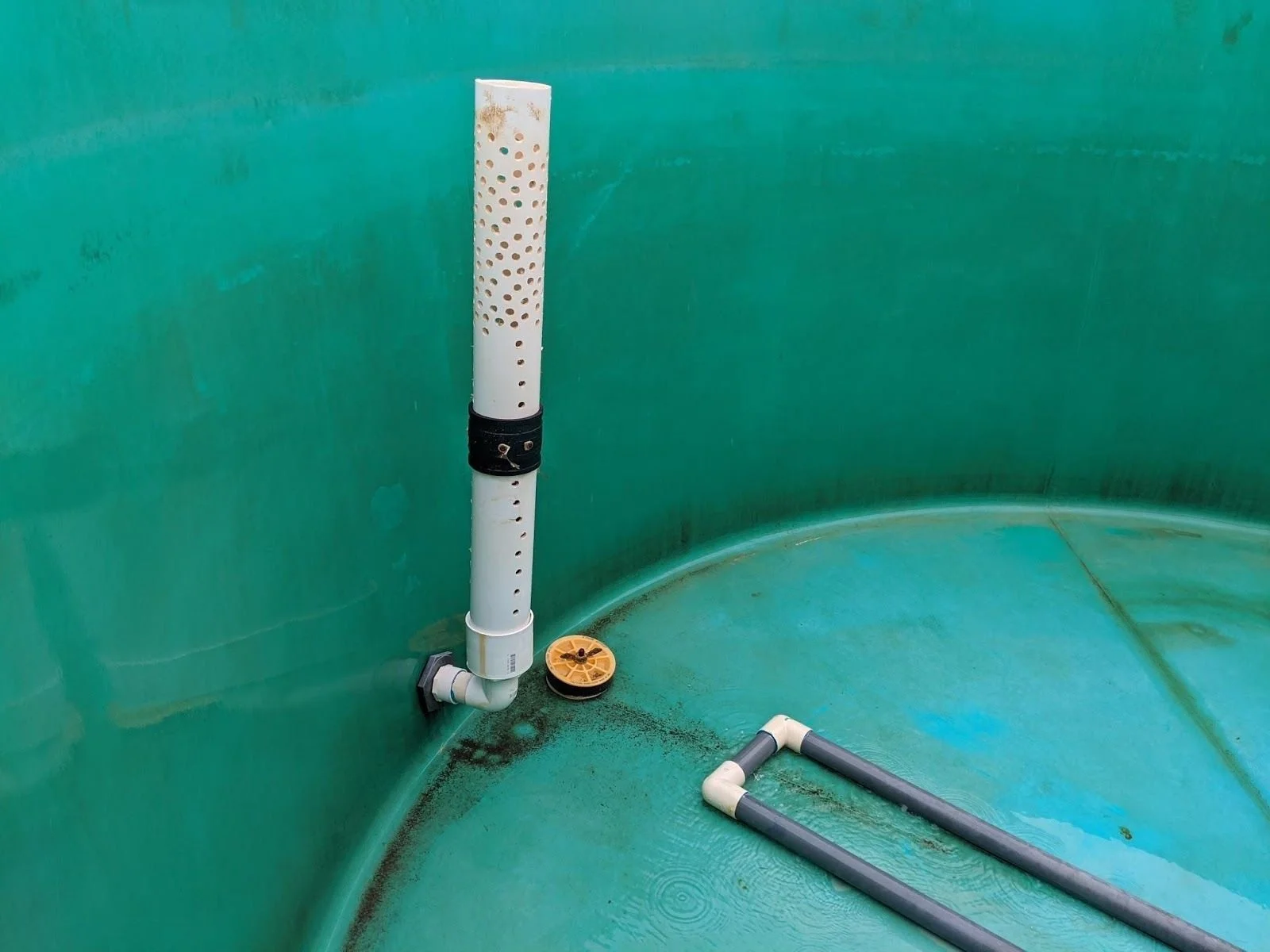
Inside a culture tank: a standpipe controls water level, while aeration equipment keeps seaweed circulating.
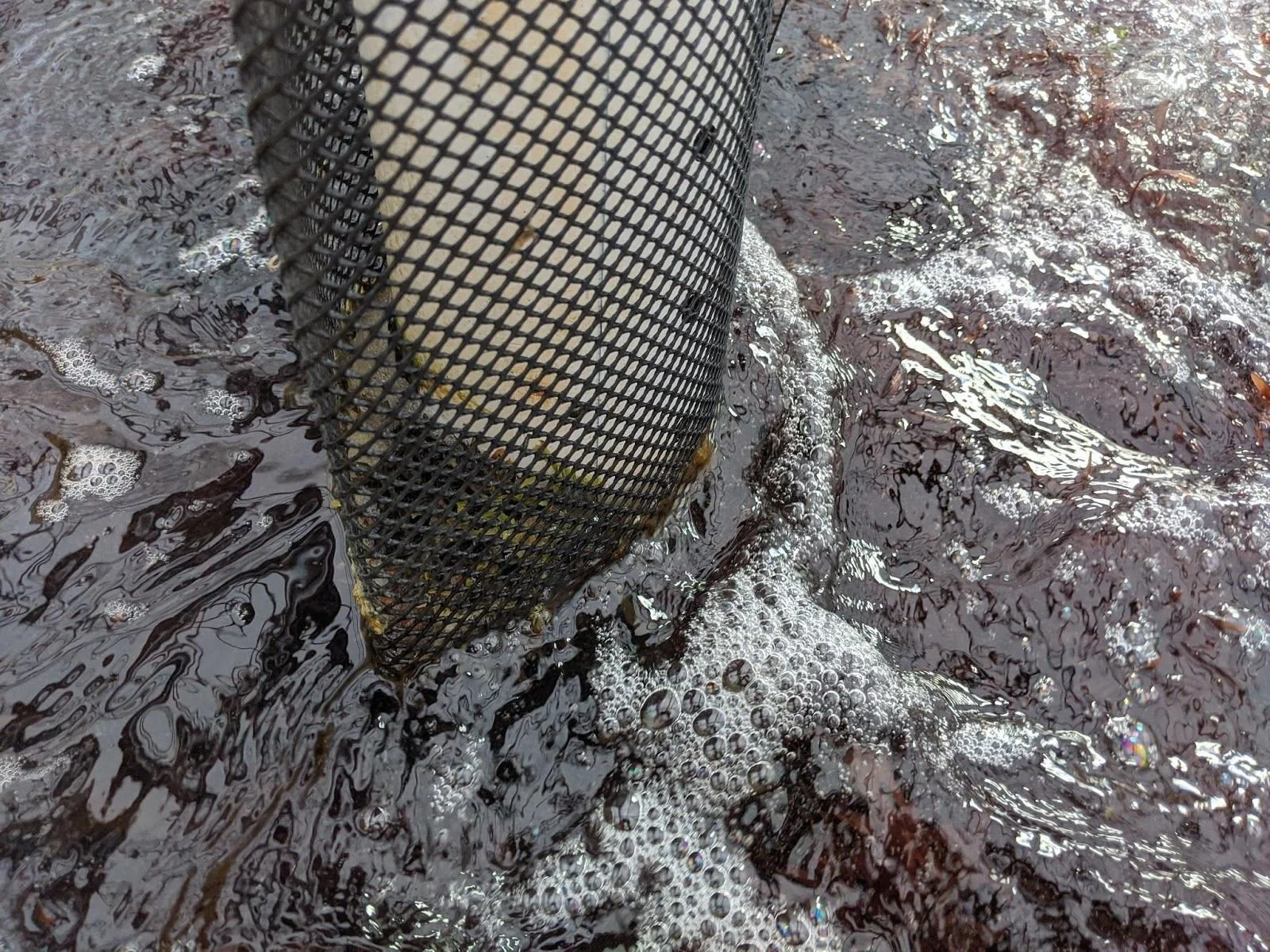
Dulse circulates around a screened overflow, which lets water leave the tank while retaining the crop.